
Early Life and the Making of a Soldier
Born in Ballarat in 1889 to a large family, Leslie Morshead trained as a schoolteacher and took posts in rural Victoria. Slight of build and outwardly unassuming, he nonetheless possessed a formidable tactical mind and an uncompromising sense of discipline. By the Second World War he would be known to his men as “Ming the Merciless,” commander of the legendary Rats of Tobruk.
Military life played only a minor role in Morshead’s early years. As a schoolmaster he commanded cadet corps in Armidale and Melbourne, but when Australia entered the First World War he travelled to Sydney to enlist as a private in the newly formed Australian Imperial Force. His long military career began not on the battlefield, but on the training grounds of Australia and Egypt.
Gallipoli and the Western Front
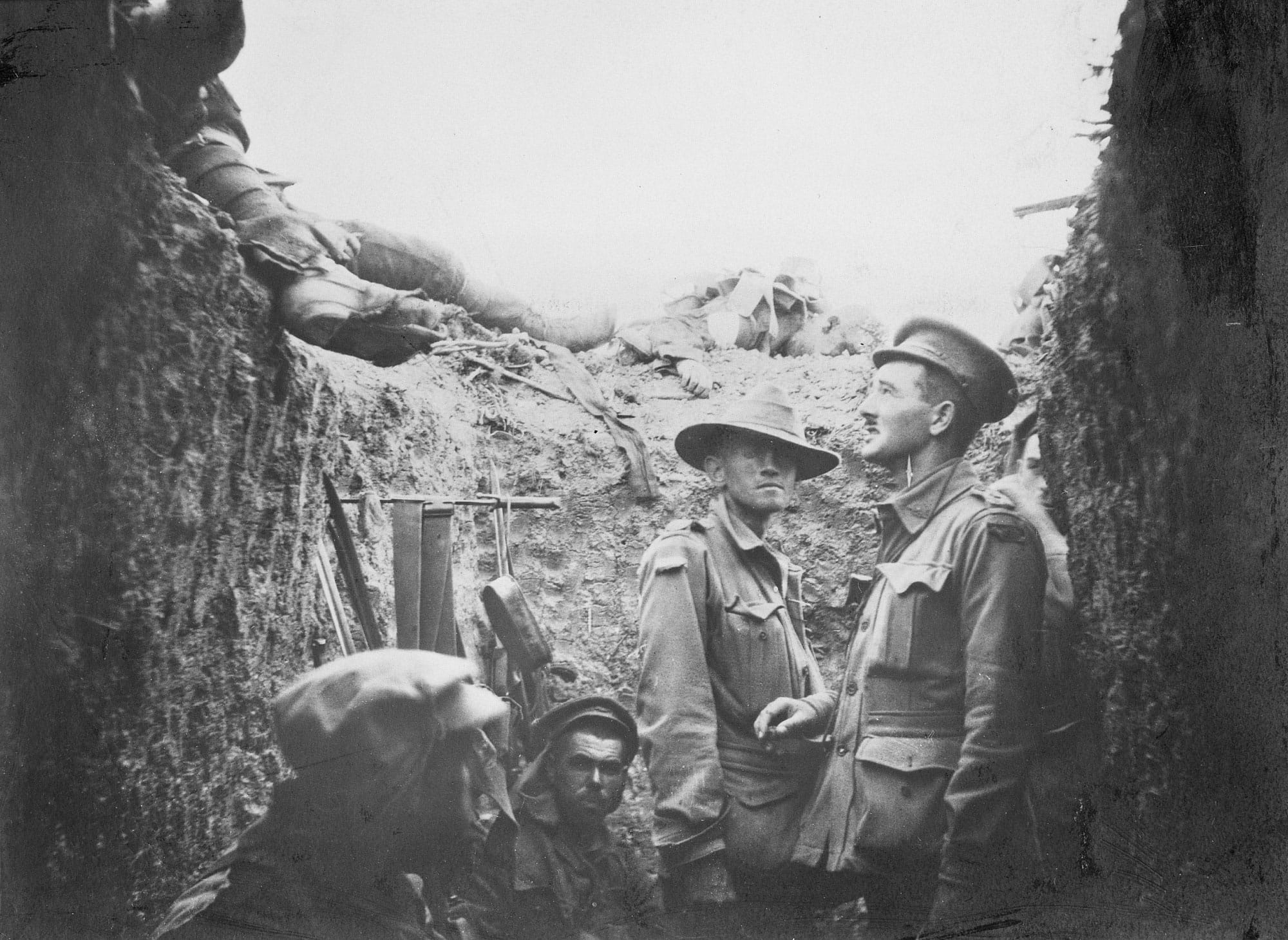
Morshead’s aptitude for command was quickly recognised. He was commissioned as a lieutenant, promoted again before deployment, and landed at Anzac Cove in April 1915 as a captain in the 2nd Battalion. At Gallipoli he distinguished himself as a resolute and aggressive leader. During the assault on Lone Pine in August 1915, he led his platoon further forward than any other Allied unit before being forced back by determined Turkish counter-attacks. He was promoted to major before the evacuation and, weakened by dysentery, was sent to England before returning to Australia in January 1916.
Still only twenty-seven, Morshead was promoted to lieutenant-colonel and given command of the 33rd Battalion, bound for the Western Front. He led his men through Messines, Passchendaele, Villers-Bretonneux and Amiens, surviving the war despite being wounded three times, once severely. By the armistice he had risen from private to battalion commander, been awarded the Distinguished Service Order, and mentioned in dispatches six times—an extraordinary record for a man not yet thirty.
Interwar Years and Civilian Life
After the war his appointment ended and he applied for land under the soldier-settlement scheme, eventually taking up farming near Quilpie in Queensland. The life did not suit him. After marrying Myrtle Woodside at Scots’ Church in Melbourne, he moved to Sydney and joined the Orient Steam Navigation Company, rising to branch manager.
During the early 1930s Morshead was associated with the New Guard, a paramilitary organisation noted for its hard-line anti-communism and hostility toward the New South Wales government of Jack Lang. The episode remains a controversial element of his interwar life, reflecting the political anxieties of the period.
Return to War and Command of the 9th Division
War returned in 1939. Australia again required experienced officers, and Morshead—now fifty—felt the obligation keenly. He accepted a commission in the Second AIF as a colonel and temporary brigadier and was given command of the 18th Infantry Brigade. Like the first AIF, the brigade trained in Australia before heading overseas. En route to Egypt, however, the collapse of British and French forces in Europe prompted fears of a German invasion of Britain. The brigade was diverted to England, where it remained on the Salisbury Plain while the Battle of Britain unfolded overhead.
By late 1940 the strategic focus had shifted to North Africa. After British-led Commonwealth forces inflicted a series of defeats on the Italians, including the capture of Tobruk, operations were halted and preparations made for intervention in Greece. In November the 18th Brigade finally sailed for the Middle East. Stationed near Gaza, Morshead trained his men for combat. In January 1941 he was promoted to major-general and given command of the newly formed 9th Division, a force that was poorly equipped and acutely conscious of its low status within the AIF.
The Road to Tobruk
The 9th Division was ordered to hold the line in North Africa while the 7th and 8th Divisions were sent to Greece. Unknown to the Allies, German forces under Erwin Rommel had arrived in the theatre. Rommel’s counter-offensive shattered the Allied line, triggering a chaotic retreat westward, nicknamed the Benghazi Handicap by Australian troops. Tens of thousands of men fell back toward Egypt under orders from the Allied commander, General Archibald Wavell.
Wavell, however, refused to abandon Tobruk and its vital harbour. He instructed Morshead to hold the fortress for eight weeks. The Australians of the 9th Division were left to defend the port while British forces withdrew to strengthen the Egyptian frontier.
The Siege of Tobruk
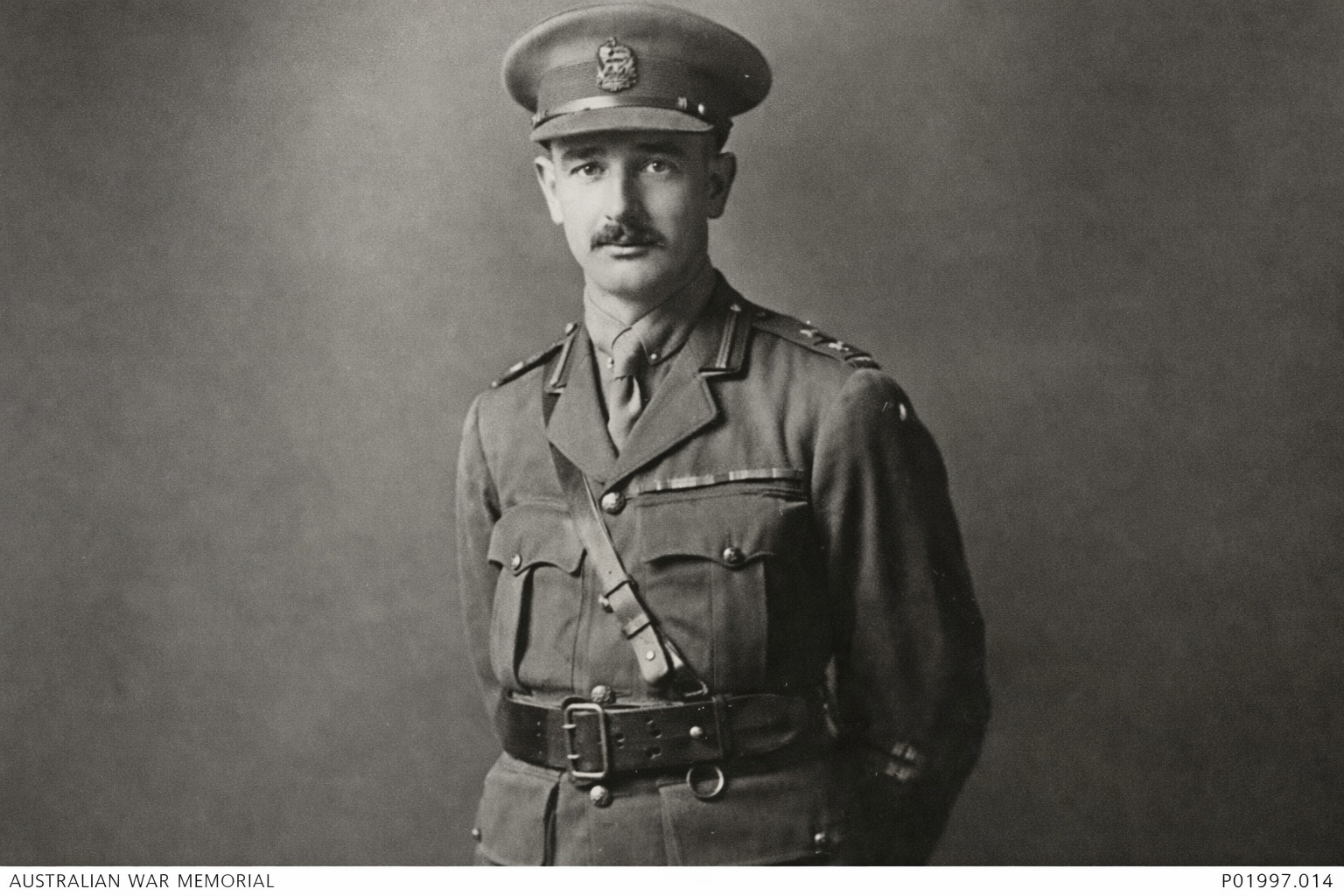
By early April 1941 Tobruk was surrounded. Axis forces had enveloped the town and pressed eastward, yet Rommel understood that Tobruk had to fall before he could advance on Egypt. Without its harbour, his mechanised forces could not be supplied. Morshead’s men were ready. For the first time in the war, German armour encountered a determined, entrenched defence that refused to yield.
The Australian war correspondent Chester Wilmot, who spent the siege with the division, observed:
“Morshead knew that nothing would sap the troops’ morale as much as idleness. He kept them working and he kept them in contact with the enemy. The work on strengthening the defences went on from the first day to the last. Morshead was never satisfied.”
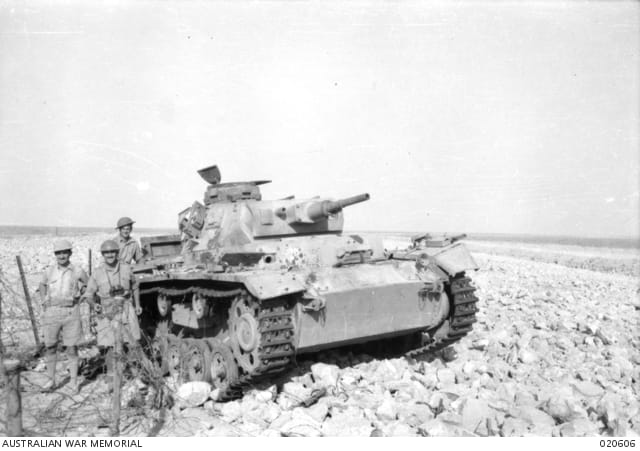
Morshead constructed a layered defence and ordered constant patrolling and raids into no-man’s-land. Enemy morale was steadily eroded by these aggressive tactics. When Rommel launched a major assault on 11 April, confident the defenders would break, Morshead met the attack with coordinated artillery and armour. Dozens of German tanks were destroyed in the initial fighting.
German propaganda broadcaster William Joyce—“Lord Haw Haw”—mocked the defenders as “rats of Tobruk.” The Australians embraced the insult, turning it into a badge of pride. Allied leaders, meanwhile, recognised the significance of the defence. On 5 May, Winston Churchill cabled Morshead to express the Empire’s admiration. Wavell followed with personal praise, crediting the defence with derailing the enemy’s plans for Egypt.
Holding the Line
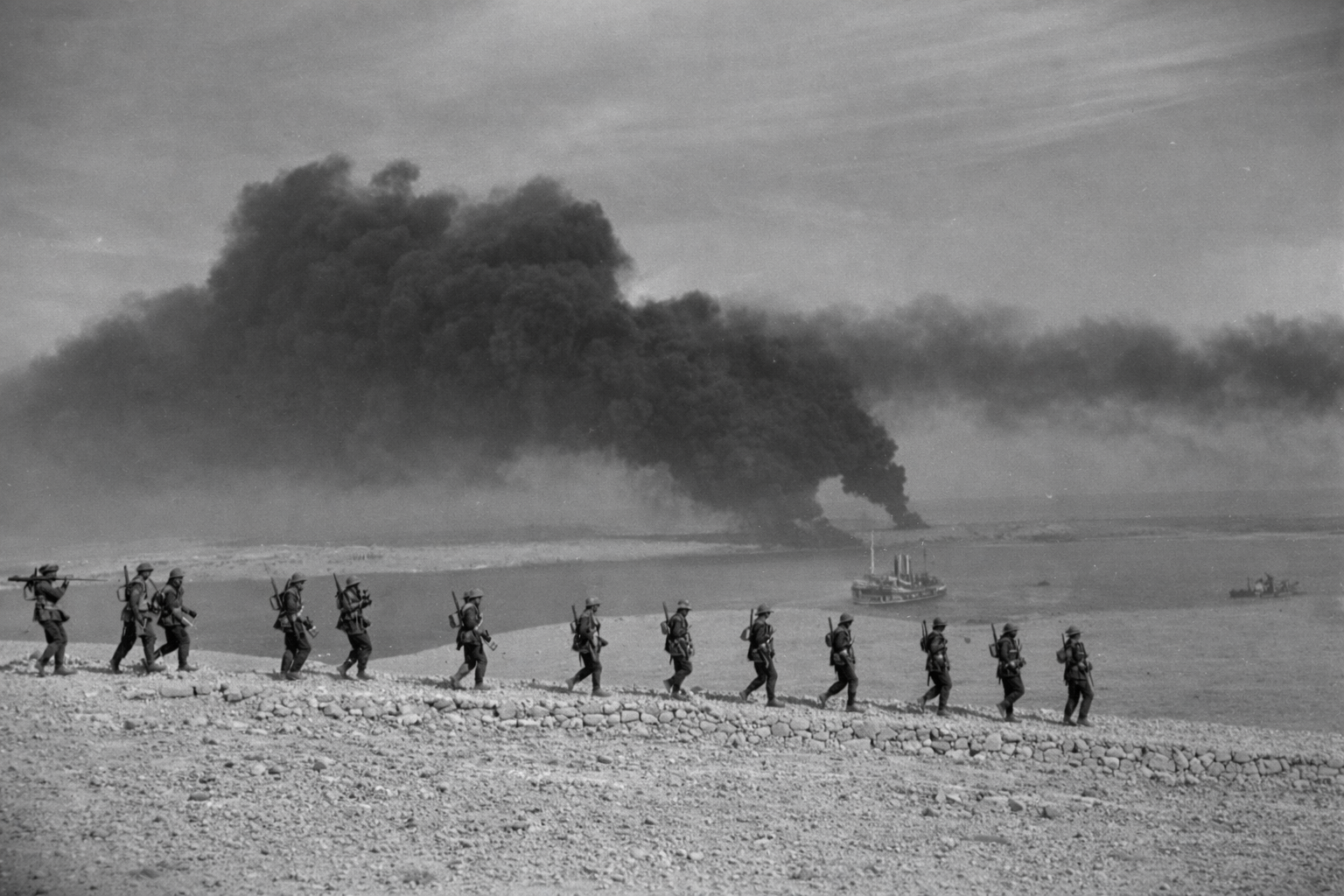
The siege bought crucial time. The counter-offensive Wavell referred to, Operation Crusader, became the first successful Allied offensive against Rommel, and it relied directly on Tobruk’s continued resistance.
The defenders’ endurance depended heavily on the Royal Australian Navy’s “Scrap Iron Flotilla,” which ran supplies from Alexandria through constant air attack along what became known as Bomb Alley. The cost was high. Twenty-three ships were lost on the route, including HMAS Parramatta and HMAS Waterhen. Without these efforts, Tobruk could not have held.
As the siege dragged on, Morshead recognised the toll on his men. Morale remained firm, but constant shelling, air attacks and the desert environment steadily eroded their health. By August 1941—eight months after the defence was meant to be temporary—the Australians were finally relieved by British, Polish and South African troops.
El Alamein and the End of the African Campaign
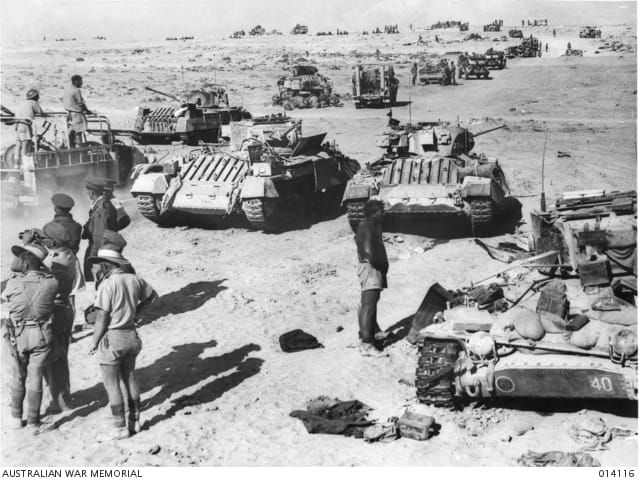
Morshead continued to command the 9th Division through the North African campaign until early 1943. He played a decisive role in the defeat of Axis forces at the Second Battle of El Alamein, yet was passed over for further promotion, the new commander Bernard Montgomery favouring officers with British regular-army backgrounds. In early 1943 Morshead and his division returned to Australia, having endured some of the hardest fighting of the war and emerged victorious at enormous cost.
The official historian of the Second AIF, Barton Maughan, later described him as:
“…every inch a general. His slight build and seemingly mild facial expression masked a strong personality, the impact of which, even on slight acquaintance, was quickly felt.”
War in the Pacific
By the time he returned home, Morshead had been on continuous active service for more than three years and had not seen his family since 1940. Yet his military service was not over. He was tasked with forming II Corps in northern Queensland, training veteran divisions for amphibious and jungle warfare against Japanese forces. The training proved its worth in 1944 when Australian troops landed at Lae and drove Japanese forces from the Huon Peninsula with determined ground assaults and superior air support.
In mid-1944 Morshead was reassigned to I Corps in preparation for operations toward the Philippines. The campaign was redirected to Borneo, a costly operation whose necessity was later widely questioned. With the Japanese surrender in September 1945, Morshead’s military career came to an end.
Final Years and Legacy
He declined further military and diplomatic appointments, including the governorship of Queensland, choosing instead to return to civilian life with the Orient Line in Sydney. Diagnosed with cancer in the mid-1950s, Sir Leslie Morshead died at St Vincent’s Hospital on 26 September 1959. He was accorded a military funeral, escorted by veterans of the 9th Division—the men of the division who had served under his command.


